
Finding Ridgewood Residents by Record Type
Start with the fact you already hold. A full address opens doors in the assessment system. An exact name plus a time period can lead instead elsewhere. It might point to a court index, a directory volume, or a newspaper archive. Ridgewood sits in Bergen County as a Village. So three levels of government may each keep part of the trail: a Village office, a county office, and a New Jersey state agency. Treat every hit as a narrow answer. A tax-listed owner does not prove that everyone at a property lives there. A dated directory entry, a court hit, or a voter status likewise settles only its own limited question. Each one answers just what it covers. Keep the source date and the record's role attached to each result. That habit separates a parcel owner from a registration confirmation or an old household listing. It also keeps a later update from looking like a contradiction.
- Search the NJ Assessment Records Search by owner, location, or block and lot.
- Use the parcel details in the Bergen County land-record index.
- Use the state Voter Information Portal for an individual registration question.
- Consult Ridgewood Library Heritage Center directories for a past household.
- Make a focused written OPRA request when the needed local record is not online.
Ridgewood Records Cross Three Governments
Geography shapes the search itself. The Village Clerk routes local requests. The Bergen County Clerk keeps land records in Hackensack. State agencies run statewide systems for vital records and voter administration. Older items can carry different labels entirely. A historical record may say Ridgewood Township, Godwinville, or a nearby municipality rather than the present Village name. The County Clerk's own history fixes Ridgewood's creation on November 20, 1894 and its later boundary changes. That explains those older names.
This split is practical, not just bureaucratic. The right office can tell you whether a record is online, in a local file, on microfilm, or at the State Archives. A broad request aimed at the wrong office delays an otherwise simple lookup.
Note: A postal Ridgewood label, the Village boundary, a tax district, and historic directory coverage are four separate geographies.
Ridgewood Offices Behind Resident Records
No single office keeps an all-purpose Ridgewood residents directory. What they do keep are records that tie one narrow fact together: a person, an address, a parcel, or a dated event. The Village Clerk is the local OPRA intake point. The Assessor holds property cards. The County Clerk maintains the recorded-land channel. Match your question to the office that actually keeps the record.
Ridgewood Village Clerk and OPRA
131 N Maple Avenue
Ridgewood, NJ 07450
201-670-5500
Ridgewood Assessor
131 N Maple Avenue
Ridgewood, NJ 07450
201-670-5500 ext. 5509
Bergen County Clerk, Land Records
One Bergen County Plaza
Hackensack, NJ 07601
201-336-7036
The Village of Ridgewood's department directory is the practical first stop for finding the right municipal custodian. Its department pages separate property, court, police-record, and health functions instead of blending them into one database. That separation saves a wasted request.
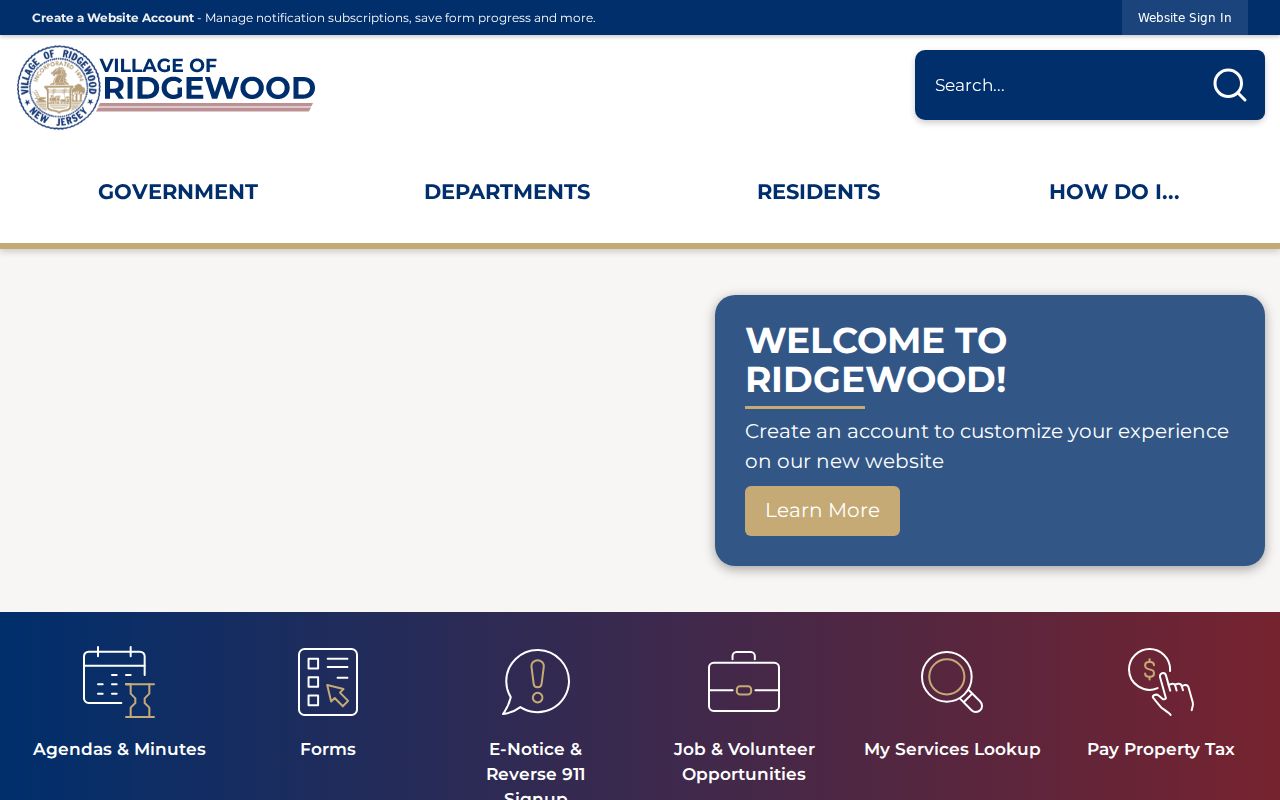
Treat the Village landing page as an orientation tool only. A request still needs a defined record, a date range, and the office that maintains it.
Ridgewood Parcel Searches by Owner or Location
When a question ties to a Ridgewood address, the assessment portal is the strongest current starting point. Select Bergen County and Ridgewood district 0251 first. Then choose either the current-owner assessment list or the deed/SR1A list. Location works as an optional criterion. Owner name, block, and lot work too. The portal's spelled-as-shown Qualifer field also works as one of the optional criteria. The results are assessment data supplied as-is. So they are not a claim about market value or about every household member.
| Assessment field | How it helps a Ridgewood search | Verified choices |
|---|---|---|
| Database | Sets the record list | Current Owners/Assmt List; Deed/Sr1a List |
| County and district | Limits the jurisdiction | BERGEN; Ridgewood 0251 |
| Location or owner name | Finds an address or tax-listed owner | Optional text criteria |
| Block, lot, Qualifer | Matches the legal parcel | Optional text criteria |
| Output format | Changes how matches can be reviewed | Single line, multi line, or Excel |
A situs address names the physical parcel location. A mailing address says where a notice goes. A block and lot identify the legal parcel itself. These values can differ, and any Ridgewood research log should preserve the difference.
- Assessment roll
- A tax administration list that can identify a parcel and tax-listed owner.
- Index
- A finding tool that points to a record; it is not always the record image itself.
- Parcel
- A defined piece of real property, commonly linked to a block, lot, and qualifier.
- Criss-cross directory
- A numerical or address section used to approach a past household from a street number.
Ridgewood Voter Records Have Narrow Uses
New Jersey's online voter route exists for one purpose: letting an individual confirm registration. The live form publishes no verified field labels. A Ridgewood search should not assume it offers a street browser. State law spells out the public registry fields and shields signatures and qualifying addresses. A registration status supports a limited registration conclusion, nothing more. It is not a count of people at an address.
N.J.S.A. 19:31-18 and 19:31-18.1 also describe certified paper registry lists and electronic county-list access. The County Elections offices, not a general people search, handle that statutory route. Requests should name the election-district scope, the format, and the field needed. They should also account for protected-address exclusions and use restrictions.
Ridgewood Current Resident Sources Compared
Current sources each answer a different question. The strongest result is usually a dated combination of sources. It is rarely one label pinned to a person. Official records tend to have a clearer custodian and a defined field set. Commercial lookup categories, by contrast, can mix old data with mismatched data. Confirm any material fact with the office that keeps the original record.
| Ridgewood source | What it can show | Keeper | Access route |
|---|---|---|---|
| Assessment list | Tax-listed owner, parcel, location, possible mailing information | NJ/Bergen/Ridgewood | Free assessment search; card by OPRA |
| Land-record index | Recorded parties, instruments, dates, legal parcel trail | Bergen County Clerk | Online from January 1, 1970; older counter or microfilm |
| Voter information | Individual registration confirmation within statutory limits | New Jersey and Bergen elections offices | Self-lookup or lawful Title 19 request |
| Case index | Party, docket, case type, status, and selected proceedings | New Jersey Judiciary | Public hub, clerk channel, or copy request |
| Heritage collections | Dated household, address, newspaper, and map evidence | Ridgewood Public Library | Heritage Center and library access |
The official route is often slower but more precise. A commercial lookup category may supply leads, yet it can be stale or merge people with similar names. The Ridgewood resident lookup route explains how to verify one person using independent, dated sources.
Ridgewood Deeds Trace Recorded Ownership
The Bergen County Clerk's online index covers documents recorded from January 1, 1970 to the present. Building a chain of title starts with the parcel. Pull the most recent deed, note the grantee, then search that name as an earlier buyer. Each step back hands you the prior seller. Municipality, block, lot, recording date, document type, and book and page let you separate a genuine ownership trail from a name coincidence. So record them as you go.
Before 1970, the work moves offline. Older deeds live at the counter, in deed books, or on microfilm, and that cutoff reflects the records medium rather than the start of Ridgewood ownership. The Clerk's staff can point a requester toward earlier material. State Archives and local-library collections carry deeper historic coverage. Check the Bergen County land-records information before ordering a copy or trusting a single search hit.
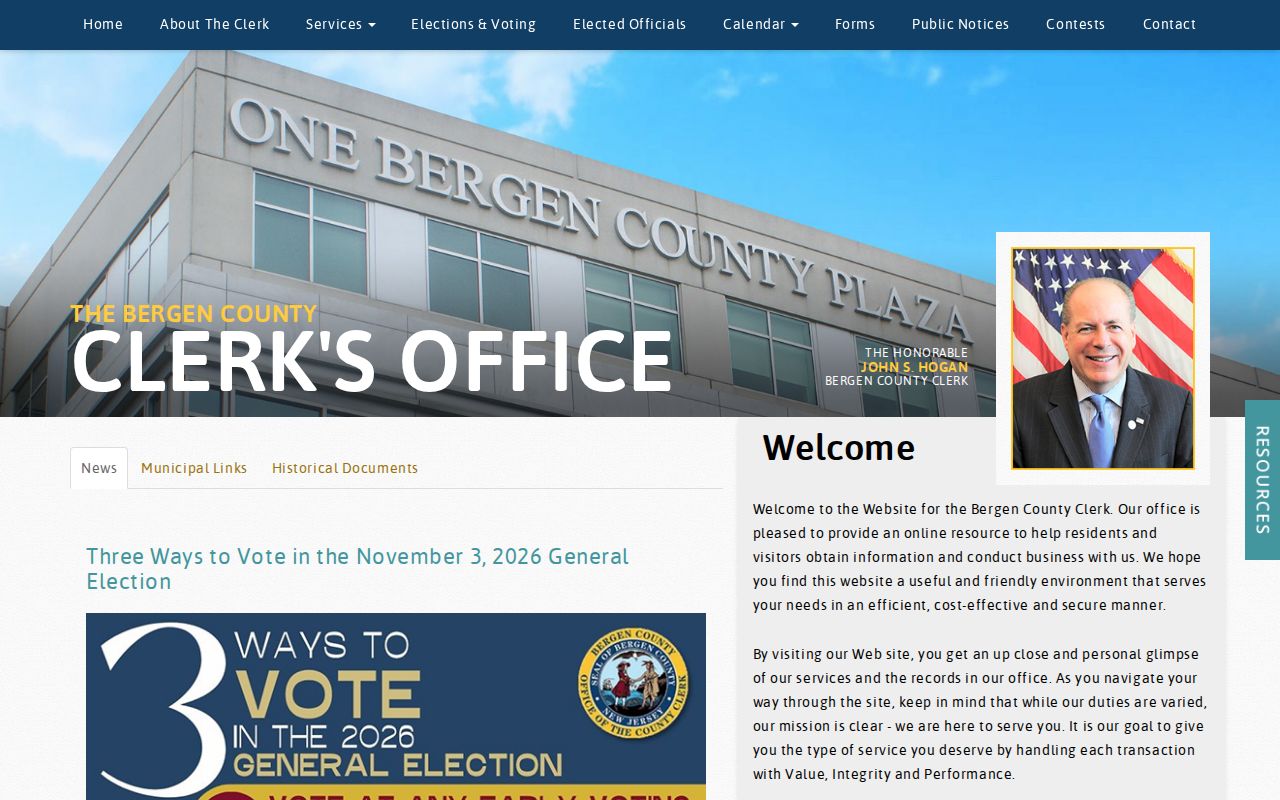
The Clerk's records page opens the door to documented transfers and office services. It still cannot replace the patient parcel-by-parcel and party-by-party comparison a Ridgewood ownership trail demands.
Ridgewood Court and Vital Records Differ
A court-party search returns practical details. Expect a docket number, venue, case status, filing date, disposition, or a lien flag. The New Jersey Judiciary public case-search hub sorts civil and criminal matters into separate routes. Municipal and tax matters get their own routes too. Public access has limits, though. Rule 1:38 exceptions, sealed matters, and division-specific copy procedures still govern what you can see.
Vital records work differently. Ridgewood's registrar handles qualifying local events. The New Jersey Department of Health manages certified and genealogical ordering statewide. State Archives holds older historical series. None of it forms a public online name index. Eligibility, identification, relationship, record date, and copy purpose decide the correct route.
Note: A cataloged index result does not guarantee that every image or certified copy is available.
Ridgewood Business and License Clues
A residents directory leans on true resident records. Business filings can still hint at who was in town. Ridgewood researchers use the New Jersey Business Name Search to pull an entity name. The same tool traces a filing trail. A second entity-document route goes further. It matches on business, principal, agent, associated name, or filing date. Treat each match as a clue about affiliation rather than proof of an address.
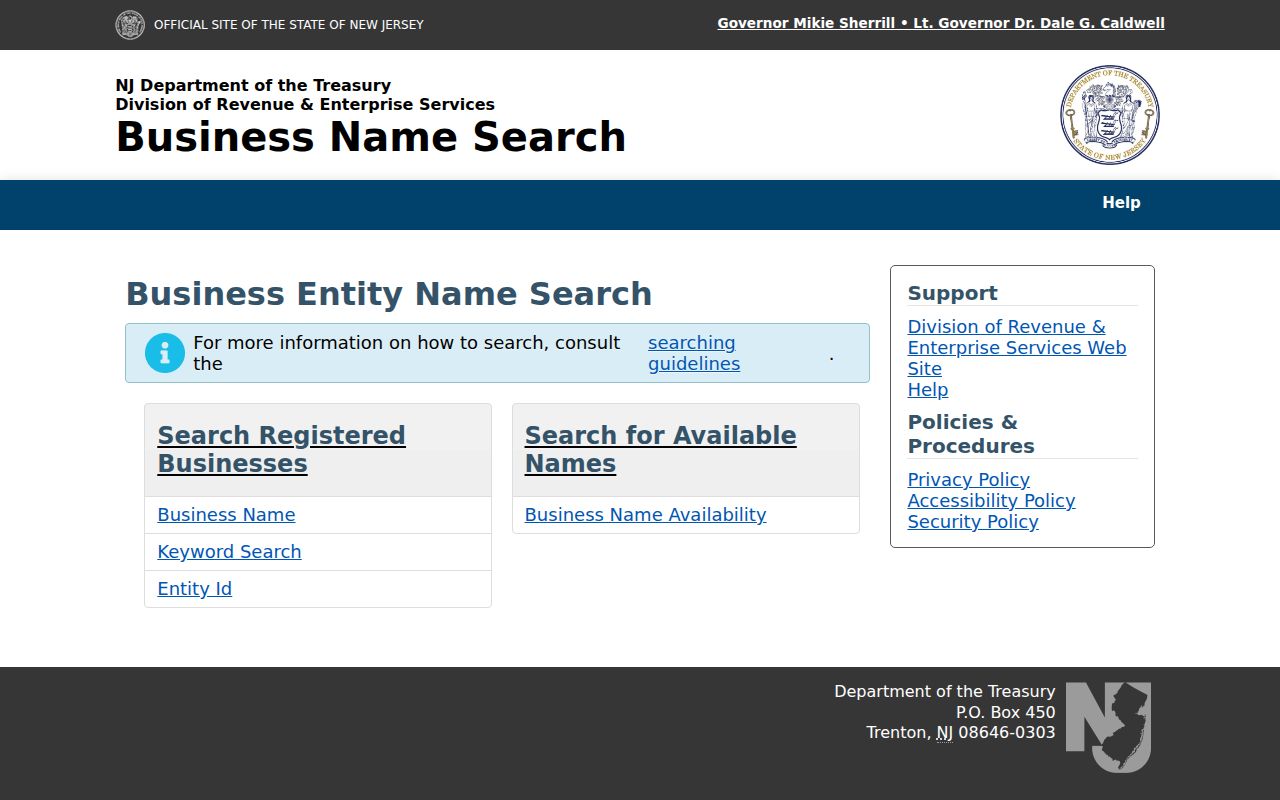
The business-name screen helps narrow an entity question. A later deed or directory may still be needed. An official filing may also help tie that entity to a Ridgewood address or date.
New Jersey's public professional license verification takes several criteria. These include profession, license type, name, number, and city. It confirms a credential or license status. A city field alone is not proof of a home address.
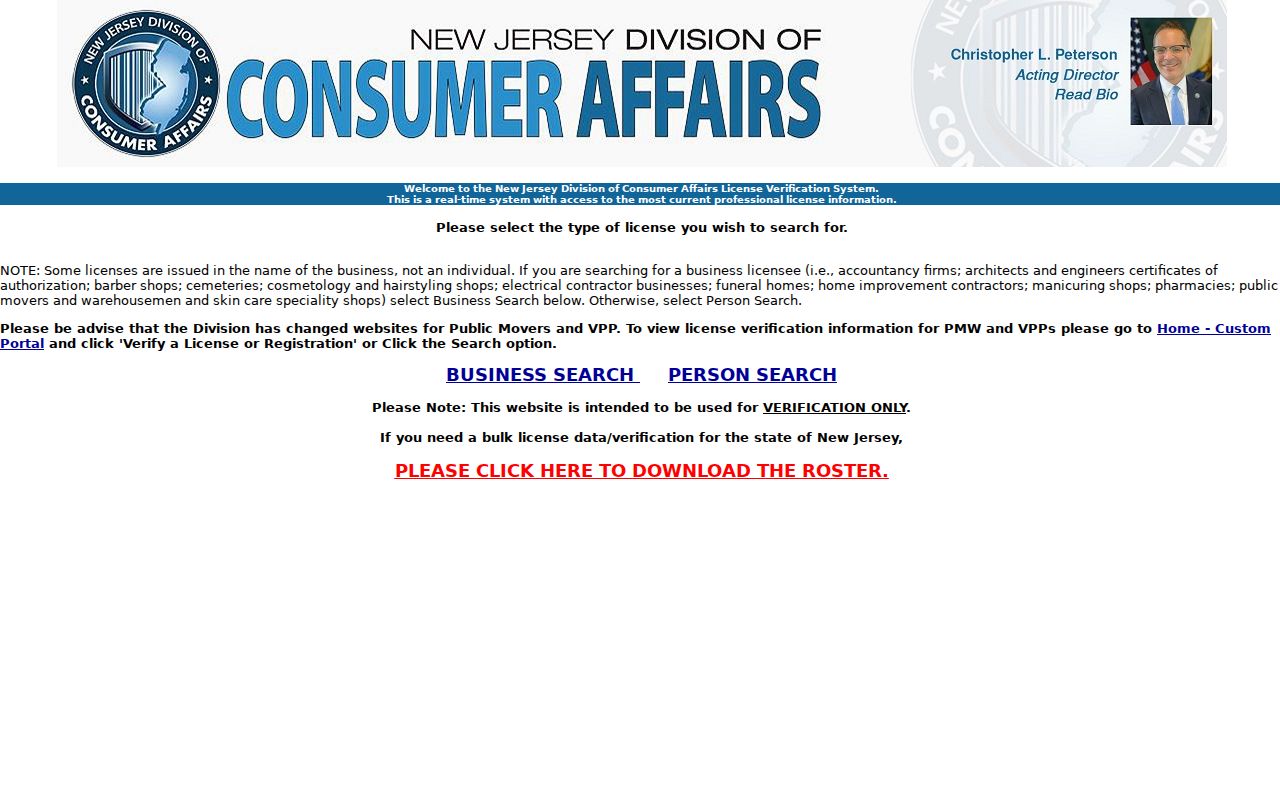
The state verification form carries its own filters for a licensing question. Keep that trail separate from the property, voter, and historical-directory paths.
Ridgewood Heritage Center Names Earlier Residents
The Ridgewood Public Library Heritage Center holds the local historical shelf. Its collections include Millar's 1897 directory, Breed's Erie Railroad directories, and Price & Lee volumes covering Ridgewood and vicinity from 1926 through 1973. The shelf also holds maps, newspapers, clippings, and local archives. The numerical section can start from an address. The alphabetical entry can then add dated household or business context. Together they let a past-residents search move from a street to a family.
Historic records need explicit timing labels. Ridgewood newspapers run on microfilm from 1891 to 2012. The Ridgewood News is available through library channels. A directory disappearance does not prove a death or a move. Test each next step with census, obituary, deed, probate, and map evidence. The full collection runs, entry fields, and household-tracing method appear in the Ridgewood directory book.
Ridgewood Privacy Protections Shape Results
A missing detail is often a legal protection, not a database error. New Jersey's Address Confidentiality Program gives qualifying participants a substitute address for future agency records. Daniel's Law shields eligible judicial, law-enforcement, prosecutorial, and related households. It does so through the Office of Information Privacy. Voter, court, vital, motor-vehicle, and police records each carry their own limits on disclosure.
The Office of Information Privacy coordinates Daniel's Law requests and redaction processes. Never try to rebuild a protected address from partial fields, historic maps, or a related record.
Ridgewood Historical Resident Directories
Historical directories are dated snapshots. Read a Millar entry from 1897 alongside its map and local organization list. A Price & Lee listing can be checked through alphabetical, numerical, business, or government-buyer sections. Capture the publisher, year, page, and section before comparing the entry against another source. That provenance preserves a distinction. It separates a printed household entry from a later reference to the same name.
Ridgewood's Village incorporation and later boundary changes complicate old files. An old file may use Godwinville, Ridgewood Township, Orvil, Franklin, Washington, or Ho-Ho-Kus geography. The record is not automatically wrong. Compare its date, map, legal description, and the directory's coverage before joining it to a modern address.